FOREST CONSERVATION
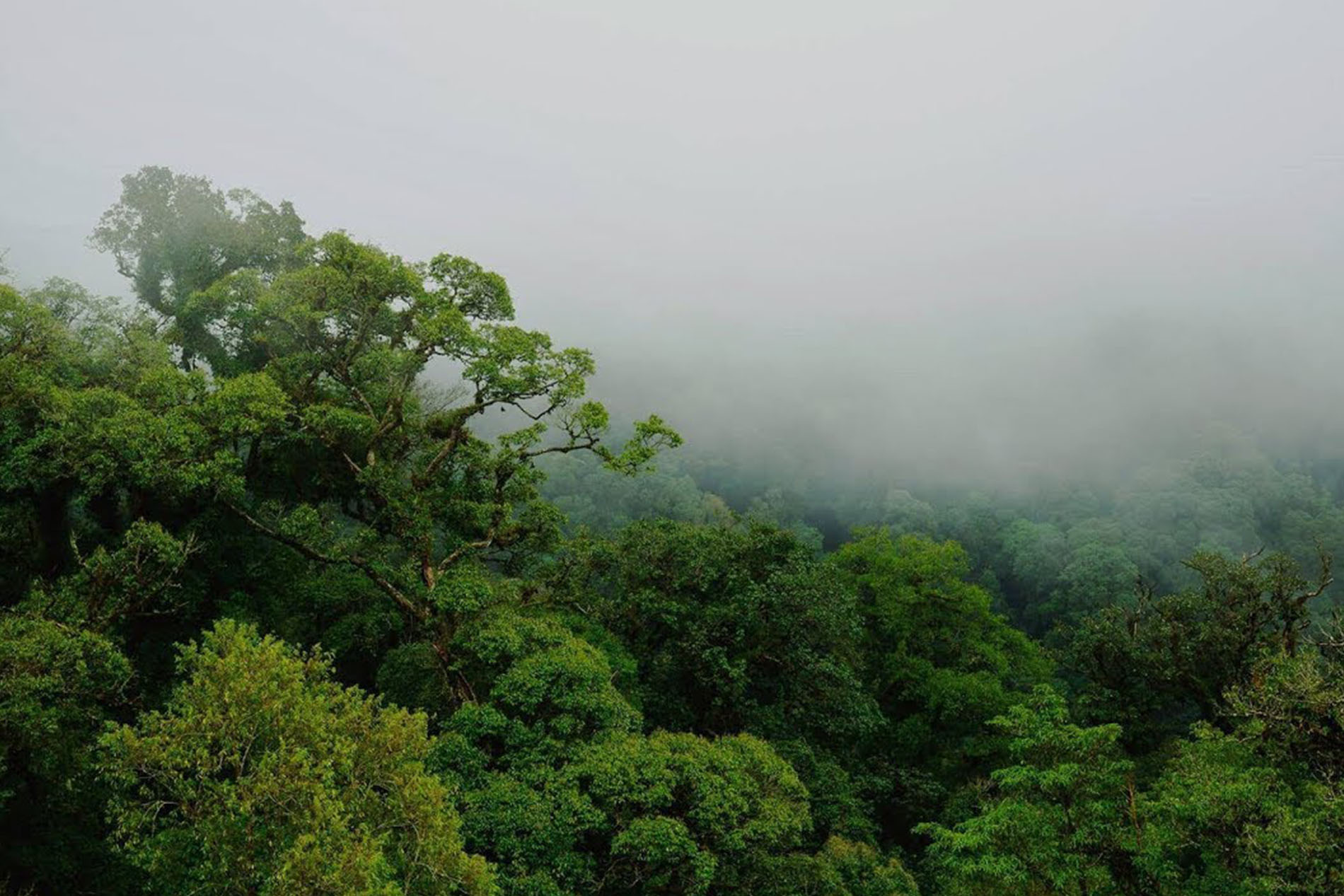
Camper’s delight
Forests — including mangroves, tropical forests, boreal forests and more — cover 30 percent of the Earth’s land surface. That’s more than the total area of Russia, Canada and the United States combined.
One in five breaths
Trees convert carbon dioxide into oxygen. More than 20 percent of the world’s breathable oxygen is produced in the Amazon rainforest alone.
Four people, every year
In 50 years, a tree can release about 6,000 pounds of breathable oxygen, enough for about 4 people per year.
Living filters
Forests next to rivers and streams act as “living filters” by absorbing sediments and storing and transforming excess nutrients and pollutants — reducing nitrogen concentration by up to 90 percent and phosphorous by as much as 50 percent.
Unmatched biodiversity
Tropical forests cover less than 7 percent of Earth’s land mass but are home to about 50 percent of all living things on the planet.
Critical cancer drugs
120 prescription drugs sold worldwide have been derived directly from plants found in rainforests, from the cancer drug vincristine to theophylline, which is used to treat asthma.
Nature = 30% of the solution
Tropical forests are remarkably effective at carbon sequestration — providing up to 30% of the global action needed to stop climate change. Despite this, of all funding devoted to stopping climate change, nature-based solutions receive only 2% of it.
50 million people
Forests are home to 50 million indigenous people around the world, more than the populations of Tokyo, Mexico City, London, New York City and Cairo combined.
Indigenous peoples protect vital forests
Worldwide, forests that are under stewardship of indigenous people contain more than 55 trillion metric tons of carbon — more than 1,200 times the amount of carbon humans emit into the atmosphere yearly.
Successful stewardship
Rates of deforestation inside forests legally managed by indigenous peoples and communities are two to three times lower than in other forests.
A significant portion of income
Forests make up more than 20 percent of household incomes in developing countries.
1 billion people.
More than 1 billion rural people depend on forests to some extent, and over 90 percent of people living in extreme poverty depend on forests for all or part of their livelihoods.
Conserving forests requires animals
Up to 90 percent of trees and plants in tropical forests rely on animals to propagate their seeds — but human activity has put these animals at risk and reduced their numbers in tropical forests by as much as half.
Better to protect mature trees
An acre of mature rainforest sequesters more carbon than newly planted or growing trees. One study found that, on average, an acre of mature rainforest stores 34 tons of carbon dioxide more than an acre of growing rainforest over a 20 year period.